What we learned from hitting #1 on Product Hunt
Brew hit #1 Product of the Week on Product Hunt last week. Here is the playbook, what surprised us, and the one thing I wish someone had told me before launching.

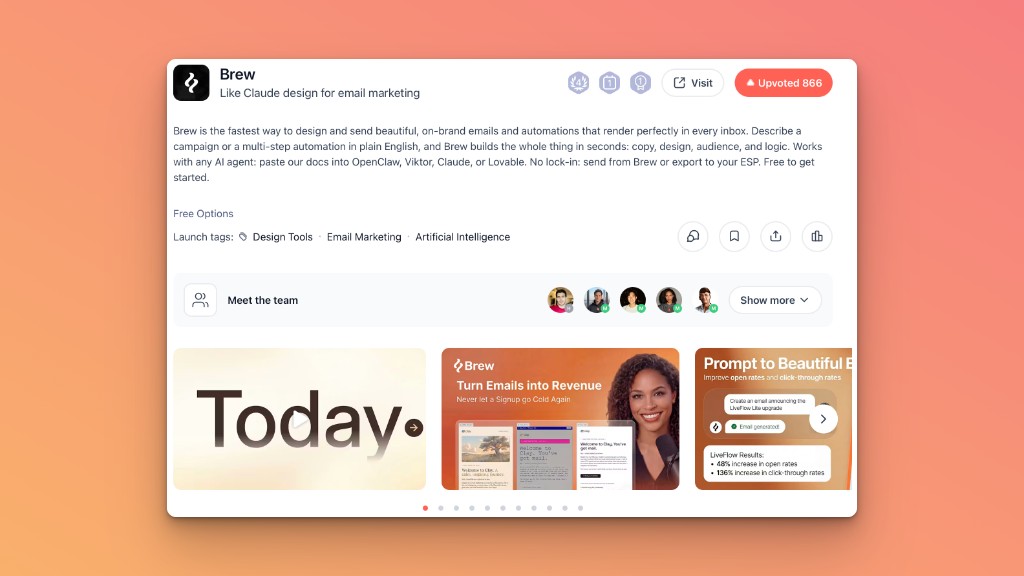
On Tuesday, May 26th, Brew hit #1 Product of the Day, then #1 Product of the Week on Product Hunt.
The badge brought a wave of new customers, opened partnership conversations we'd been chasing for months, and got us picked up by Superhuman AI's newsletter (1.5M+ subscribers) and a dozen other publishers the same week. None of that surprised me.
What surprised me was the analytics dashboard on Monday morning. ChatGPT is now our #1 referral channel.
A Product Hunt #1 in 2026 isn't really a launch. It's a training signal. You're not winning a launch-week popularity contest. You're uploading a structured authority artifact into the same corpus that ChatGPT, Claude, and Perplexity quietly consult every time someone asks them which AI email tool to use, for the next three years.
The playbook
There's no magic to the launch playbook itself. Almost every step below is something other founders have written about before, and most of it will sound familiar if you've followed a Product Hunt postmortem in the last five years. What made the difference for us was executing every one of these steps with intent, especially the unglamorous ones.
Build something people want. The unglamorous one, and the only one that matters. Everything else here is downstream of having a product people want to talk about. We spent a long time on the product before we ever thought seriously about a launch, and that's the part most launch playbooks skip.
The customer calls. We'd done hundreds of calls with users in the months before launch. Some became customers, others were curious founders peeking at what we were building.
Every one of those calls ended the same way. I asked if they'd be willing to support us on Product Hunt when we launched. Everyone said yes. That was the audience.
We tested every angle live before we picked one. Thumbnail, gallery, tagline, maker's comment, the demo videos. We ran different versions of the messaging in front of different audiences in real conditions and watched what landed. By launch day, we weren't guessing about which framing would work for developers versus marketers versus founders. We'd seen each version perform.

The version we landed on. Every word, image, and gallery thumbnail on this page was tested before it got here. Nothing was coincidental.
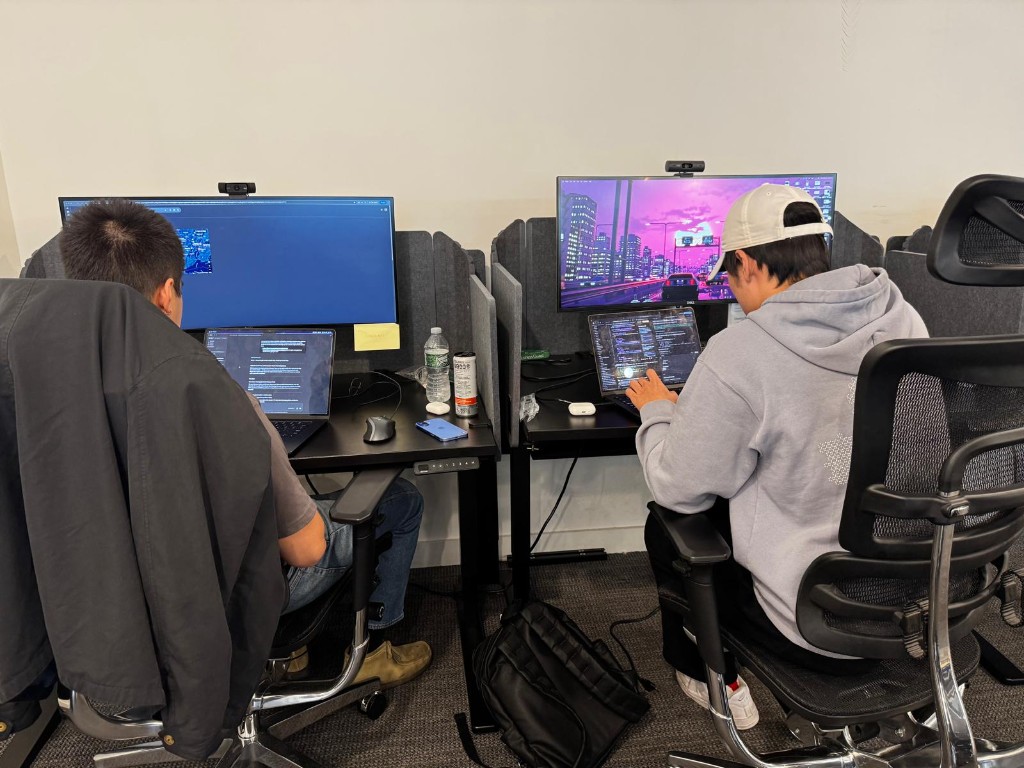
Launch day was a war room. We cleared our calendars the day before, the day of, the day after. The only thing we didn't pause was customer calls and support, because we weren't going to drop the people who'd actually paid us in the middle of a launch.

Our mighty Brew team in the launch war room, with every calendar cleared except customer support.
The first hour on Product Hunt matters disproportionately. PH launches drop at midnight PST, which is 3am for us in New York. The war room was running by then, with the inner circle lined up to upvote and comment in the first 60 minutes. We personally replied to every comment, often within minutes. Maker presence is half the engagement signal on a launch page, and most launches go quiet by hour three.
We kept going for the Week. Most teams launch and then disappear. We treated each new milestone as its own thing with its own messaging: Day badge first, then a real push for the Week. The Week badge compounds visibility in ways the Day badge doesn't, and almost nobody sustains the energy past day one to fight for it.
That's the playbook. Most of it is unsurprising if you've launched before.
The one tactical thing I didn't see anywhere else. Product Hunt's monthly leaderboard is based on calendar months. We launched on May 26th and ended May at #4 of the month, behind three products that had launched in the first week of May and so had three extra weeks to accumulate upvotes for the monthly contest.

Brew at #4 of May with 878 upvotes, ahead of #2 (864) and #3 (853). The catch: some of those trickled in during the first days of June, after the May ranking had already locked.
By the time I'm writing this on June 2nd, we already have more upvotes than #2 and #3 of May, and it wouldn't surprise me if by the time you read this we've passed #1 too (you can check the leaderboard yourself). The math just doesn't work for a late-month launch.
If you want the fully tactical version with every other checkbox spelled out, Tally's launch checklist is the most thorough public one I've seen and worth keeping open during prep.
The more interesting story for us is what came out of the launch that we didn't go in expecting at all.
What I didn't expect
The playbook above is what got us the badge. The real story of this launch, for us, is what the badge unlocked once we had it, and three things in particular caught us off guard.
LLMs have made Product Hunt one of the highest-leverage launches of the year
When someone asks ChatGPT what email marketing platform is actually agentic and AI-native today, the model needs structured signals to figure out what to recommend. It pulls from places where products are categorized, ranked, reviewed, and crawled. Product Hunt is exactly that kind of source, and a top-of-week badge is one of the strongest authority signals on it.
A live ChatGPT query for the best AI email marketing platform. The badge did most of the work.
The badge isn't a one-week spike anymore. It's a discovery channel that compounds every month as more of the world starts asking ChatGPT, Claude, and Perplexity for product recommendations instead of Googling.
Distribution is the scarce resource. Product craft is what makes distribution work.
The reigning startup take in 2026 is that AI made building easy, so the only thing that matters is distribution. The most articulate version of this argument is the GTMnow Distribution Era post: AI collapsed both the cost of building and the cost of copying, so a fast follower can match your feature in days. The only thing left to defend is the audience.
I half agree. Distribution is harder than ever. We know, because it's been our number one priority and our biggest challenge for the past few months.
But I'm also seeing more bad products with bad UI shipped this year than at any point in my career. The exact thing that's supposed to make distribution the only moat (everyone can build now) is producing a tidal wave of generic, half-finished products. When your product is one of fifty in a category, distribution gets impossibly expensive. The companies winning launches right now aren't the ones with the loudest GTM. They're the ones whose products are unmistakably better the first time someone uses them. That's what generates the upvote, the screenshot, the share, the LLM recommendation, and most importantly the retained and happy customer.
The gap between a 75/100 product and a 95/100 product is now the entire game. When everything is buildable, the only thing that travels through a screenshot is the 20-point gap.
I think we won this launch because Thomas, my co-founder, has spent the last year obsessing over details most teams don't care about.

The thunk we keep thinking about.
"We have a running internal philosophy at Brew that polish isn't nice to have, because that phrase implies it doesn't affect the user. Polish is more like the sound a German car makes when you close the door. It signals quality and craftsmanship before the user has consciously registered why. The car drives the same with or without the satisfying thunk. But you remember the thunk. It's part of why you love the car."
Thomas Park, co-founder & CTO @ Brew
In an era where everyone can build with AI, the scarce resource isn't distribution. It's the willingness to spend time on details nobody is asking you to improve.
Put differently: your best marketing ROI channel (aside from email marketing, of course) is the product itself.
The launch handed us our Beachhead ICP
For any young startup, deciding on an ICP is one of the most consequential calls you make. It determines what you build, how you sell, and which trade-offs you say yes to.
Brew's product has always been very horizontal. We have customers across multiple industries, company sizes, and personas. That's both a blessing (huge TAM) and a challenge (lack of focus).
We'd spent a year trying to pick our beachhead deliberately. We did customer interviews, built frameworks, had internal discussions that went in circles. Nothing landed. Three days of Product Hunt traffic settled it.
The people who signed up and converted to paid in the same session kept fitting one profile. They were already running paid, lifecycle, content, and outbound with their own stack of agents, and email was the last channel that still looked like 2018. What they wanted from Brew wasn't a copilot for email. They wanted Brew to be the same kind of operator they already were across every other channel.
That's our Beachhead ICP. They go by different names:
- The AI-pilled 10x marketer.
- The GTM engineer.
- The one-person marketing team doing what used to take a whole department.
Different titles, same shape: the operator who already runs every other channel with a stack of AI agents holding the rope, and now wants their email channel to fit the same way.
If you're a founder, you've tried to hire this person. If you're a marketer, you've tried to become them. They're the operator every CEO has quietly decided they need in 2026, and the role most companies don't yet know how to hire for.
Launches don't just market your product. They cluster your customers for you. We learned more about our ICP from 72 hours of Product Hunt than from twelve months of trying to think our way to it.
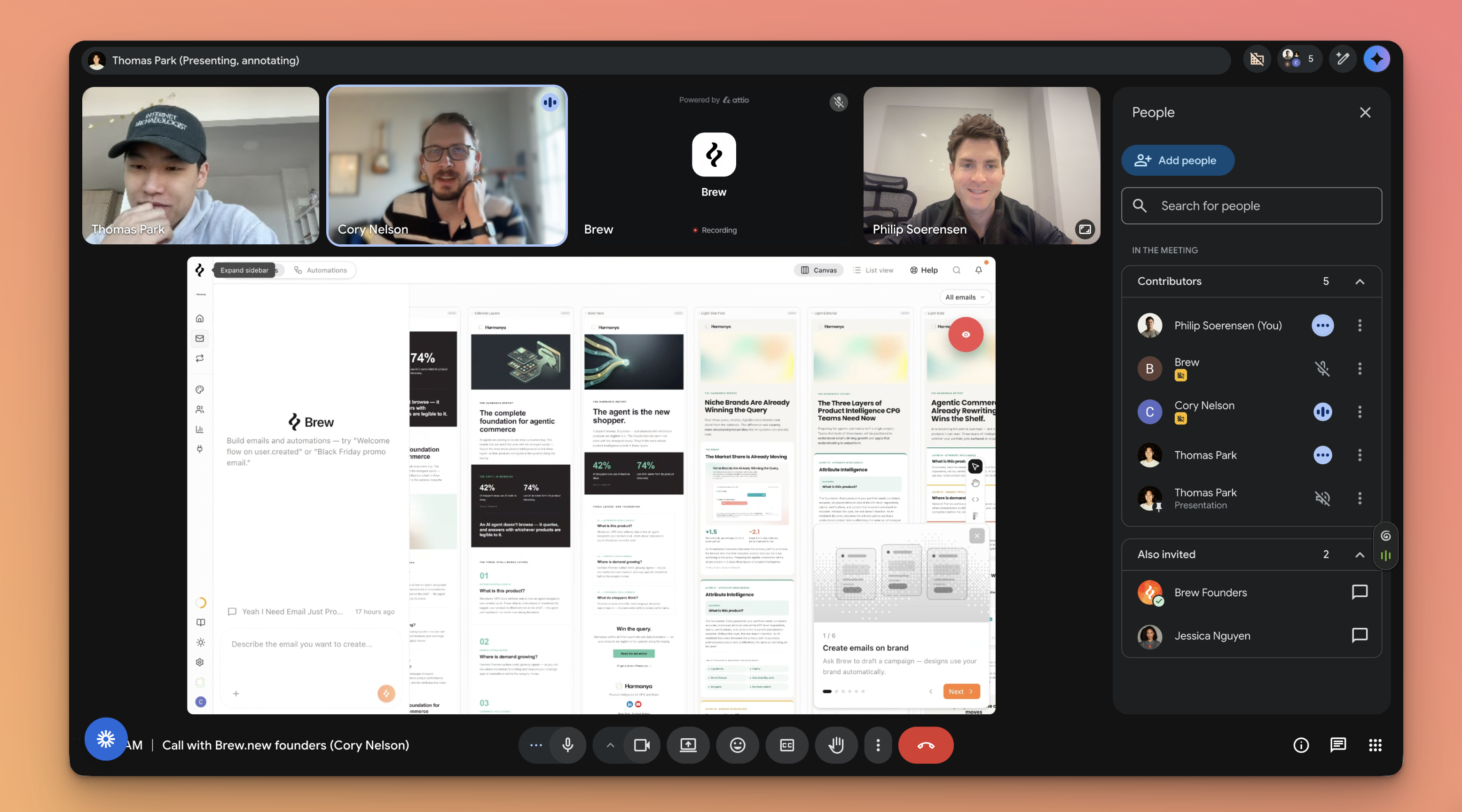
The clearest version of this showed up in a call I had this morning with Cory Nelson, the sole marketing team at Harmonya, an AI product intelligence platform helping Fortune 500 CPG brands and retailers turn messy product data into clear, shopper-led insights. Cory signed up the day before, spent an evening with Brew, and booked the call because he wanted to push it further than he'd already pushed it.
When he shared his screen, the emails he'd designed for Harmonya the night before were already production-grade. On-brand, sharp copy, the kind of work a real marketing team takes a week to ship. Cory had been doing the same work in Claude before. His read on Brew was simple: "You did to email what Claude did to design. It's the first email tool that fits how I already build with agents." He became a paying customer right after the call.

Cory Nelson (Harmonya) walking Thomas and me through the emails he built in Brew.
A note for any founder thinking about a launch
For a long time I thought of a launch as a marketing event: the badge, the spike, the week of attention. Building Brew has taught me that's the smallest part of what a launch actually is in 2026.
A launch today is three things at once. It's a permanent stake in the corpus that ChatGPT, Claude, and Perplexity will recommend from for the next decade. It's a public clarification of who your product is really for, written in the conversion data of people you've never met. And it's a stress test for every detail you spent the last year quietly obsessing over, where the details that survive are the ones that travel through screenshots.
Each of those compounds for years, and none of them depend on the launch week itself. They depend on what you spent the year before the launch actually building.
The launch is the moment the iceberg surfaces. Spend the year building the iceberg.

Ready to send better email?
Brew creates professional, on-brand emails in under 60 seconds.