
Noah Adelstein wrote up Cory Nelson at Harmonya. What we saw the morning after he signed up, and what the setup actually depends on.

Cory Nelson is founding director of marketing at Harmonya. He's the whole function. Harmonya is a product-intelligence company for CPG brands and retailers, founded in 2021, based in New York and Tel Aviv.
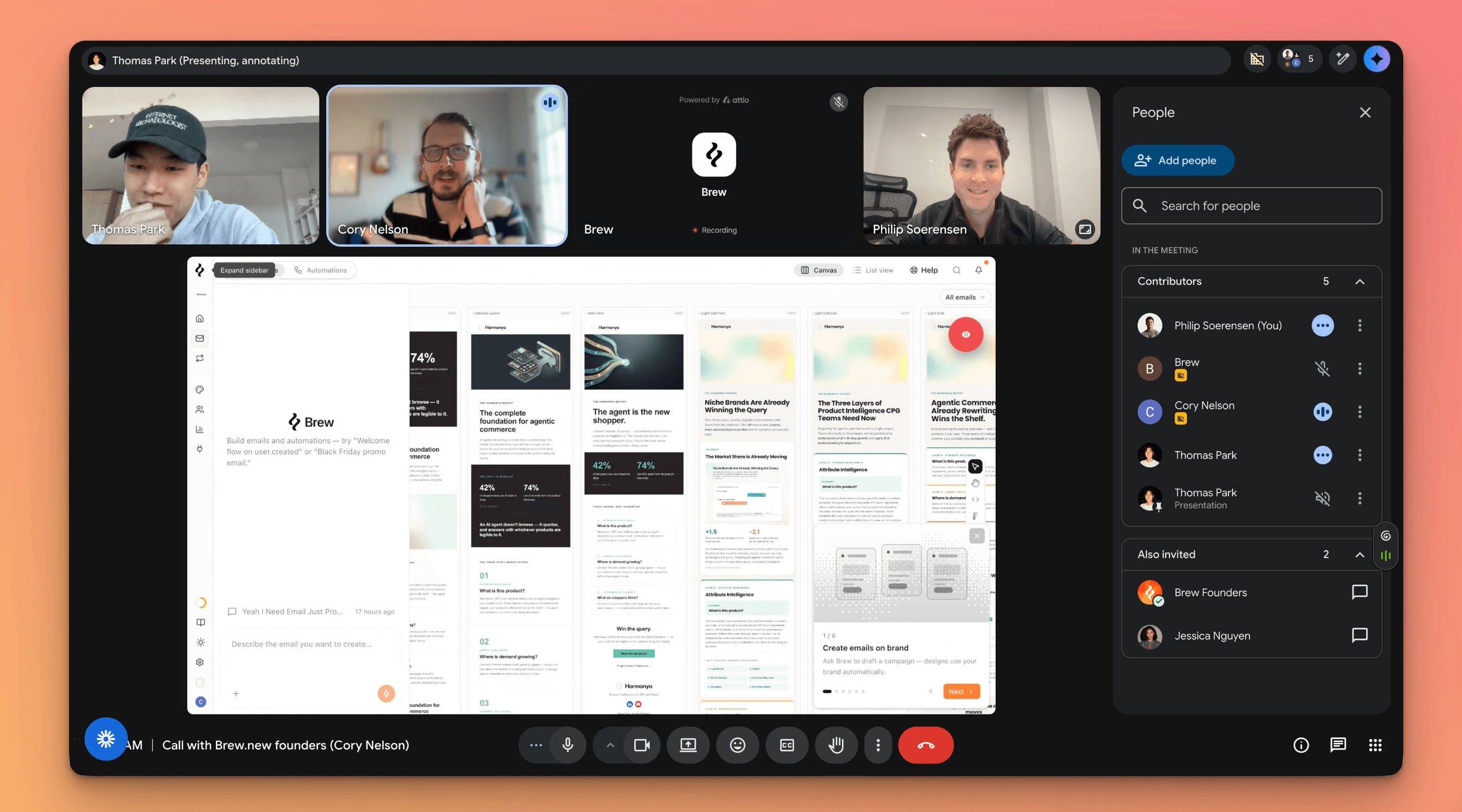
He signed up for Brew one evening. The next morning Thomas and I were on a call with him. He'd already spent the night in the product. Harmonya emails were on the canvas, the agentic-commerce drafts and the product-intelligence ones. He booked the call because he wanted to go further, not because he needed a tour.
That's the part I can speak for. The operating detail below comes from Noah Adelstein's piece for The GTM Engineer, published August 20, 2026. Brew sponsors that community. Noah says so in the essay. The numbers are his, attributed to Cory. We did not instrument this as a Brew case study.
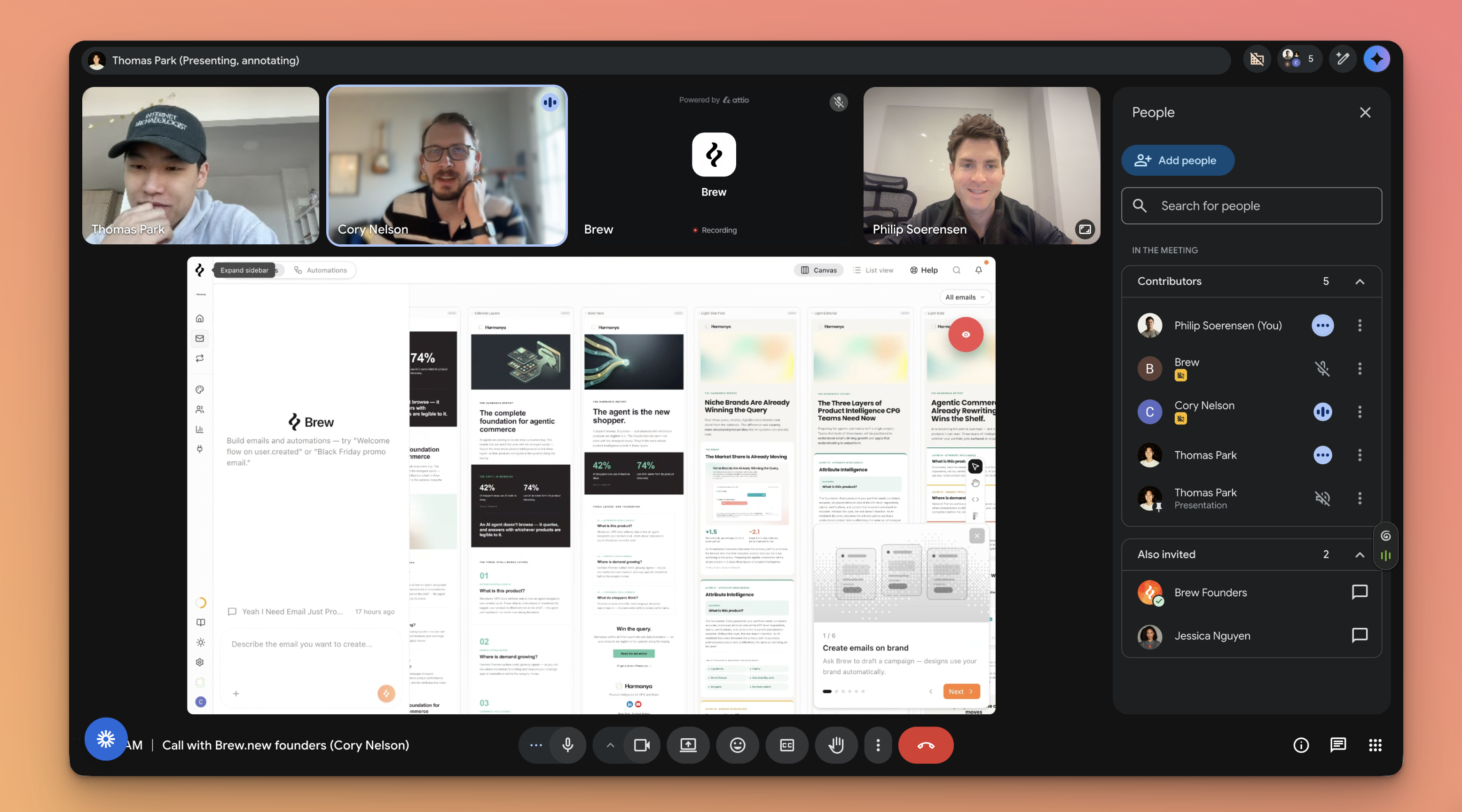
The morning after signup. Cory on Meet, Harmonya drafts already on the canvas.
Cory told Noah he was spending about 5% of his time on email, and still not getting enough back. The old motion lived in HubSpot: open a template, select the whole list, send. A monthly newsletter, plus the odd product announcement. Same message, every name.
Noah's framing is that Harmonya sells into enterprise CPG brands, and he used PepsiCo and Colgate as the scale of those buyers. A blast that ignores category, role, and buying stage wastes a list like that. They had already tried to fix it inside HubSpot. More fields, more lists, more of Cory's week. The tool got heavier. The mail did not get more precise.
Cory kept HubSpot as the CRM. Brew sat on top of it for composition, segmentation, and send. He builds most of the email in the Brew UI, where he can see type and layout. He sends, stands up automations, and reads results in Claude through MCP.
Noah describes a sequence using Harmonya's existing white paper, blog post, and video. His account of the routing is summarized below.
| Step | What it did |
|---|---|
| 1 | A short, zero-click email, a few stats, no download yet |
| 2 | A click through to the blog |
| 3 | The white paper, after they'd seen the argument |
| Reported logic | Wait between steps and use observed email engagement to guide follow-up |
The lesson I would carry into another program is to use a category that changes the message, rather than send the same introduction to every contact.
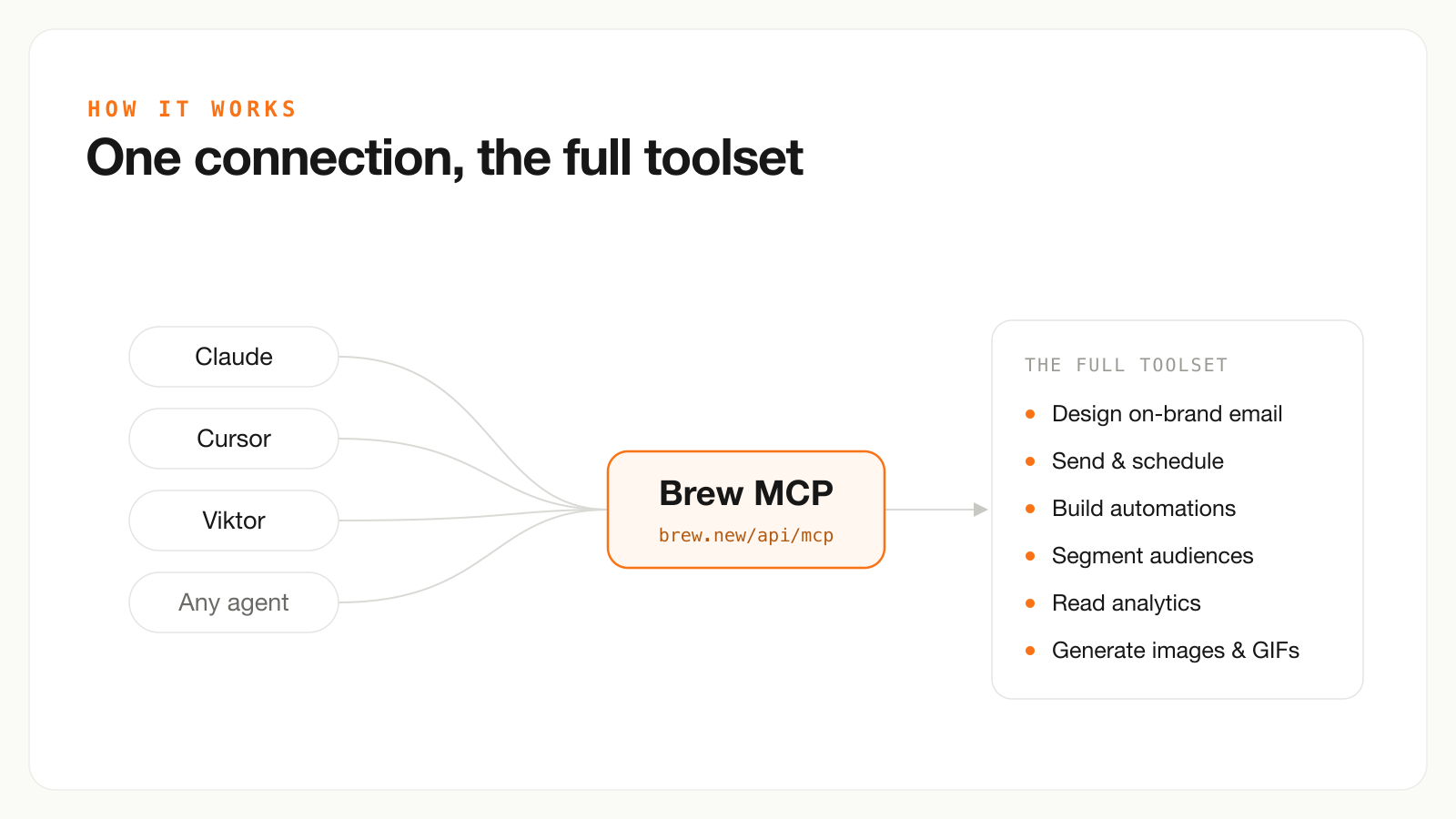
The loop Cory described to Noah. Claude on the outside, Brew in the middle, HubSpot underneath.
Cory told Noah that opens and clicks more than doubled against the old all-list HubSpot baseline. Treat that as a reported comparison from one operator, not a controlled result or a Brew performance guarantee. The list, offer, and cadence changed together, and opens can be distorted by mail privacy features.
Noah also describes a factual review of the first campaign against its source assets. That is the step I would preserve in any agent workflow.
On our call, we discussed accounts, roles, and who actually signs. Brew cannot supply a buying-committee map the team has never recorded. Keep the CRM context explicit and review how it reaches the email workflow.
Cory did not arrive as a prospect who needed a demo. He'd already used the product harder than the onboarding flow expected. He became a paying customer after that call. I wrote the morning down in What we learned from hitting #1 on Product Hunt, because it was the first time our ICP stopped being a slide.
The sentence he gave us was: "You did to email what Claude did to design. It's the first email tool that fits how I already build with agents." On LinkedIn, after Noah's piece ran, he wrote, "Brew + Claude is a superpower!"
We didn't spend that hour on onboarding slides. We spent it on the accounts he already sells, and on what a sequence looks like when the reader is a category manager rather than "the newsletter list."
The reported sequence does not establish how eligibility was checked. Brew event conditions can read current Brew contact fields through contact.<name>, provided those fields stay synced. They do not query the CRM. For account state outside Brew, have the application check eligibility and fire a fresh event. See the automation guide.
Keep the CRM you already trust. Put an agent on top of it only if someone on the team will read the first send against the source material. Segment by the field that changes the sentence, not by a persona name from a workshop. And don't ask an agent for a lifecycle program if the list is still one field and a hope.
Read Noah's essay. He sat with Cory longer than we did on any one call. The short version, with what Cory moved from and what he reports since, is on the Harmonya customer page.
The brief shape we now tell other teams to use is in how to brief an email agent. The inbox rules that still apply when Claude hits send are in what still applies when an agent sends.